

Most facility risk management doesn’t show up on a checklist.
It shows up on the worst possible day, during peak demand, critical production windows, or when budgets are already tight.
When something fails, it’s easy to point to the equipment that broke. But in reality, most facility risk builds quietly over time, long before a failure ever happens.
Risk Isn’t Just About Old Equipment
- Inconsistent maintenance across systems
- Limited visibility into how equipment is actually performing
- Deferred planning due to competing priorities
- Reactive decision-making under pressure
None of these issues feel urgent…until they suddenly are.
The Hidden Cost of “We’ll Deal With It Later”
Facilities that operate in reaction mode often don’t realize the true cost:
- Emergency repairs cost more than planned work
- Downtime compounds quickly across operations
- Decisions made under pressure are rarely optimal
- Teams lose confidence when failures feel unpredictable
What’s missed isn’t effort, it’s foresight.

A Real-World Example: When Maintenance Became a Risk Strategy
At a mission-critical facility in the region, a newly appointed executive questioned why HVAC maintenance costs were so high.
A review of service history revealed a reactive approach driven by emergency response rather than planning. After implementing a structured maintenance program, the facility reduced service-related costs by more than $140,000 year over year while improving predictability and reducing emergency calls.
What changed wasn’t the equipment; it was the approach to risk.

Where Risk Actually Lives
A facility may pass inspections year after year, yet still have no real insight into how a critical system performs during peak load, or how close it is to failure.
Facility risk tends to live in the gaps:
- Between inspections
- Between departments
- Between short-term fixes and long-term planning
- Between what teams assume is working and what data would reveal
Without consistency and visibility, risk remains invisible.
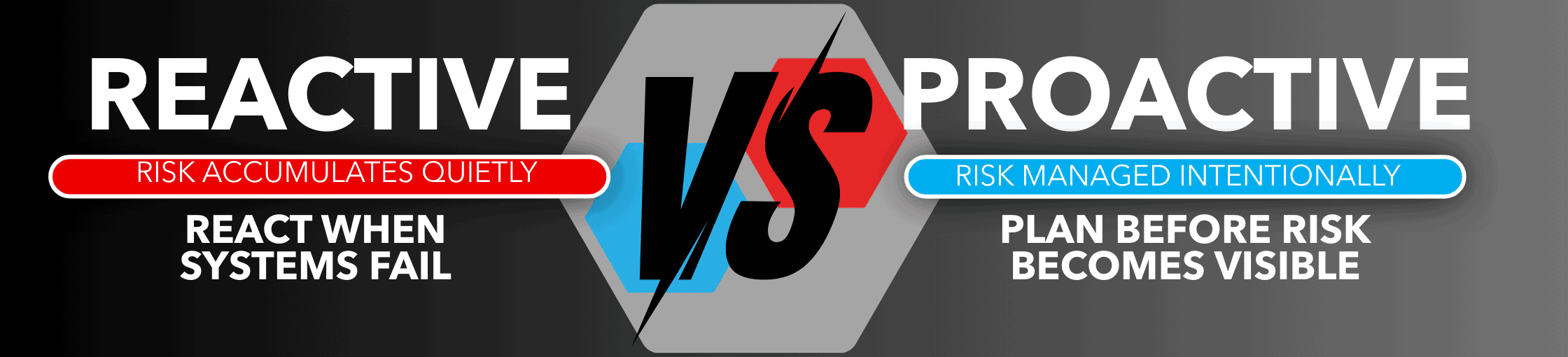
Reducing Risk Starts With Awareness
- Understanding which systems are truly critical
- Establishing consistent maintenance standards
- Identifying early warning signs before failures occur
- Creating room for planning instead of reacting
Risk reduction isn’t about doing more work. It’s about doing the right work earlier.
A Better Way Forward
- Fewer emergencies
- Better budgeting predictability
- Stronger operational confidence
- Clearer long-term direction
The goal isn’t perfection, it’s preparedness. Because risk doesn’t disappear on its own. It either gets managed, or it eventually makes the decision for you.
FAQs: Facility Risk Management
What is facility risk management?
What are the biggest causes of hidden facility risk?
Hidden facility risk often comes from inconsistent maintenance, limited visibility into system performance, deferred planning, and reactive decision-making. These issues can stay unnoticed until peak demand or a critical production window exposes the problem.
How can facilities reduce risk without replacing equipment?
Why does reactive maintenance increase downtime risk?
Reactive maintenance increases downtime risk because issues are addressed only after failure, often under pressure and during critical operations. Emergency repairs typically cost more, take longer, and force faster decisions with fewer options.
Where does facility risk usually build over time?
Facility risk often builds in the gaps, between inspections, between departments, and between short-term fixes and long-term planning. When teams lack consistency and performance visibility, risk can remain invisible until it becomes an emergency.
What are early warning signs of increasing facility risk?
Explore Proactive Facility Planning
For facilities ready to move from reaction to preparedness, the first step isn’t necessarily new equipment; it’s visibility and planning.