

Most commercial chillers are built to last 25 to 30 years or more when properly maintained. However, the control systems that operate them often become outdated much sooner.
As technology advances, older controls become more difficult to service, replacement parts become harder to source, troubleshooting becomes increasingly challenging, and integrating the equipment with today’s building management systems can become a significant hurdle.
So, does an aging control system mean it’s time to replace the entire chiller?
Not necessarily.

One of the most expensive assumptions in facility management is believing that operating equipment = healthy equipment.
In reality, many systems that appear to be ‘working’ are running 20-30% longer cycles to meet demand. Chiller-specific issues like internal tube fouling, refrigerant imbalances, or early-stage compressor wear don’t cause immediate shutdowns. Instead, they silently destroy efficiency. For example, even a thin layer of scale inside heat exchanger tubes acts as an insulator, forcing the compressor to run longer and harder to achieve the same cooling load. This not only inflates energy bills but also accelerates wear on the system’s most expensive components.
The facilities that experience fewer emergencies aren’t necessarily the ones with newer equipment. They’re the ones that investigate problems while they’re still small.
What is a chiller controls retrofit?
A chiller controls retrofit replaces outdated control components with a modern control platform while keeping the existing chiller in service.
Depending on the equipment, a retrofit may include:
- A new control system
- Updated pressure transducers and sensors
- New actuators
- Variable Frequency Drive (VFD) add-ons or upgrades
- New wiring and electrical components
- Programming and commissioning
- Startup testing and optimization
Rather than replacing an entire chiller, a retrofit modernizes the technology that controls it, giving facility teams better visibility, improved diagnostics, and a more serviceable system.

Old Chiller Does Not Always Mean End of Life
When a chiller is mechanically sound but electronically outdated, a controls retrofit can modernize the system without replacing the entire machine.
- Improved reliability
- Advanced diagnostics and fault history
- Easier service and troubleshooting
- Better Building Automation System integration
- Improved operational visibility
- Greater value from existing equipment
The right solution depends on the condition of the equipment, the needs of the facility, and the long-term goals of the customer.
Project spotlight
THE CHALLENGE
Our customer had an aging chiller with an obsolete control system that had become increasingly difficult to support.
While the chiller itself still had years of useful mechanical life remaining, the outdated controls limited diagnostics, made troubleshooting more challenging, and created long-term serviceability concerns. Integrating the existing controls with today’s Building Automation Systems (BAS) was also becoming increasingly difficult.
Rather than replacing an otherwise dependable chiller, the customer chose to modernize the existing equipment with a complete controls retrofit, replacing the obsolete control system with a modern control platform designed to improve reliability, visibility, and long-term supportability.
The goals of the project were to:
- Improve reliability
- Simplify future maintenance and troubleshooting
- Modernize the control platform
- Improve integration with the existing Building Automation System (BAS)
- Increase visibility into equipment performance
- Maximize the value of an existing capital investment
More Than Replacing A Control Panel
From the outside, a controls retrofit might appear to be little more than replacing an electrical cabinet.
In reality, it’s a complete modernization of the chiller’s control system.
To complete this project, our technician:
- Safely recovered the refrigerant and prepared the chiller for installation.
- Removed the obsolete control cabinet, sensors, wiring, starter components, and existing drive equipment.
- Installed a new controls platform.
- Installed new pressure transducers and sensors throughout the chiller.
- Installed a new Variable Frequency Drive (VFD) and reactor.
- Routed and terminated new control and power wiring.
- Installed and calibrated new actuators.
- Programmed the control system, configured operating parameters, and commissioned the equipment.
Every wire, sensor, actuator, and electrical connection was carefully installed, verified, and tested before startup to ensure the entire system operated safely and as designed.
While the new control platform is the centerpiece of the project, a successful retrofit depends on much more than replacing a controller. It requires a thorough understanding of the chiller’s mechanical systems, electrical components, control sequences, and how each part of the system works together.
That’s what transforms a controls retrofit from a hardware upgrade into a true equipment modernization.

An Experienced Technician Looks Beyond the Original Scope
One of the greatest benefits of experienced technicians is what they discover beyond the original scope of work.
While preparing the chiller for startup, our technician found the system was approximately 200 pounds low on R-123 refrigerant.
Correcting the refrigerant charge before commissioning ensured the new controls could operate the equipment the way they were designed.
It’s a great reminder that successful projects aren’t just about installing new technology.
They’re about understanding the entire system.
See the Retrofit in Action
Reading about a controls retrofit is one thing.
Seeing the process unfold is another.
We’ve included actual jobsite footage captured by our technician throughout this project, giving you a behind-the-scenes look at what goes into modernizing a commercial chiller.
From removing obsolete controls to installing the new control platform, wiring, programming, commissioning, and startup, the video walks through the entire retrofit process end to end.
Unlike a staged demonstration, this footage was recorded during the actual project and documented through our Visual Intelligence reporting platform, the same platform our customers use to track service calls and projects, complete with photos, videos, and real-time technician updates.
Why Controls Retrofits Matter?

Many facility managers assume aging equipment automatically means replacement.
Often, that’s simply not the case.
When the mechanical equipment is still structurally sound, upgrading the controls can provide significant benefits without replacing the entire chiller.
Potential advantages include:
- Improved reliability
- Better diagnostics and fault history
- Easier troubleshooting
- Better integration with modern building automation systems (BAS)
- Modern communication capabilities
- Improved serviceability
- Better operational visibility
- Extended equipment life
Research evaluating modern HVAC control strategies has shown energy savings of 20–30% in many applications by optimizing system operation and reducing unnecessary energy use.
Modern building automation and control systems also provide operators with better system visibility, making it easier to identify developing issues before they become emergency repairs.

Can Older Chillers Be Modernized in Other Ways?
A controls retrofit isn’t the only option for extending the capabilities of an existing chiller.
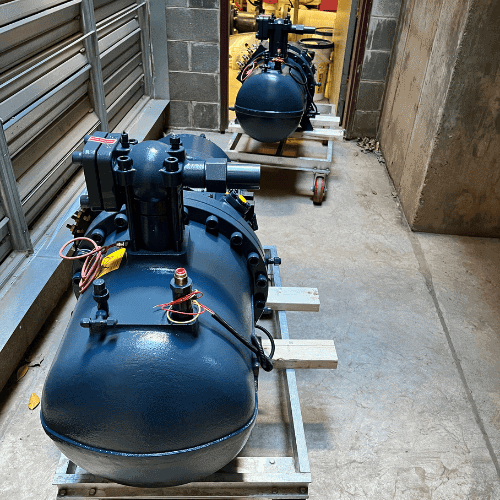
Depending on the age, condition, and goals of the facility, many chillers can also be upgraded with modern compressor technology, Variable Frequency Drives (VFDs), and other mechanical improvements that enhance performance and reliability.
Every chiller is different, which is why we begin with a thorough evaluation of the equipment before recommending a solution. Sometimes the right answer is a controls retrofit. Other times, a compressor retrofit, mechanical upgrade, or even a complete replacement may provide the greatest long-term value.
Our goal isn’t to recommend a one-size-fits-all solution. It’s to help our customers understand their options and make the decision that’s right for their facility.
When Should You Consider a Controls Retrofit?
A controls retrofit may be a smart option if:
- Your controls are obsolete or no longer supported.
- Replacement parts are becoming difficult to source.
- The chiller is mechanically sound but electronically outdated.
- Your maintenance team struggles to diagnose recurring issues.
- You’re planning capital improvements but want to maximize the life of existing equipment.
- You’re looking to improve reliability without replacing an otherwise dependable machine.
A controls retrofit isn’t about making old equipment last forever. It’s about matching the right solution to the condition of the equipment and helping customers make informed decisions about their facilities.
Chiller Modernization Decision Matrix
Not every aging chiller needs the same solution. This decision matrix can help facility teams understand when to consider a controls retrofit, compressor retrofit, broader modernization assessment, or replacement evaluation.
| Your Situation | Consider | Why It Matters |
|---|---|---|
| Controls are obsolete, but the chiller is mechanically sound. | Controls Retrofit | Modern controls can improve diagnostics, reliability, serviceability, and integration with existing building management systems. |
| Compressor performance or efficiency has declined, but the rest of the chiller is still viable. | Compressor Retrofit Evaluation | A compressor retrofit may improve performance while allowing the facility to continue using existing chiller infrastructure. |
| Both the controls and mechanical components are aging or difficult to support. | Modernization Assessment | A broader evaluation can help determine whether controls, compressor upgrades, VFDs, sensors, or other improvements make sense. |
| The chiller has major mechanical failures, recurring reliability issues, or no longer meets facility needs. | Replacement Evaluation | Replacement may provide the greatest long-term value when repair costs, downtime, or performance limitations outweigh modernization options. |
This matrix is a starting point. The right recommendation should always be based on the condition of the equipment, the operational needs of the facility, and the customer’s long-term goals.
Protecting Your Investment
Commercial chillers are one of the largest capital investments many facilities make.
Protecting that investment doesn’t always mean buying new equipment.
Sometimes, it means modernizing what you already own.
This project is a great example of how experienced technicians can combine mechanical expertise with modern controls technology to improve reliability, uncover hidden issues, and help customers get more life from their existing equipment.
Because at Oklahoma Chiller, we don’t just replace parts. We help our customers make informed decisions that keep their facilities operating reliably for years to come.

Is Your Chiller a Candidate for a Controls Retrofit?
Not every aging chiller needs to be replaced. If your equipment is still mechanically sound, a controls retrofit may be a practical way to improve reliability, modernize operations, and better integrate with your Building Management System (BAS). Use this assessment as a starting point.
Checked Several Boxes?
If several of these statements describe your facility, your chiller may be an excellent candidate for a controls retrofit. The next step is a professional assessment to determine whether a controls retrofit, compressor retrofit, broader modernization, or full equipment replacement is the best long-term solution for your facility.
Every facility is different. Equipment condition, operational requirements, budget, and long-term goals should always be considered before recommending a modernization strategy.
THE BOTTOM LINE
Every commercial chiller eventually reaches a crossroads.
The question isn’t always “Should we replace it?”
Sometimes the better question is:
“What part of the system actually needs to be modernized?”
As this project demonstrates, obsolete controls don’t automatically mean an obsolete chiller. When the mechanical equipment is still in good condition, a controls retrofit can improve reliability, simplify troubleshooting, enhance Building Automation System (BAS) integration, and provide operators with better visibility into system performance.
Every facility is different.
Some chillers are excellent candidates for a controls retrofit. Others may benefit from a compressor retrofit, additional modernization, or complete replacement.
The key is understanding the condition of the entire system before making a major capital decision.
MAKE YOUR NEXT CAPITAL DECISION WITH CONFIDENCE.
Whether you’re planning future upgrades, evaluating aging equipment, or simply wondering if your existing chiller still has years of reliable service ahead, our team can help you understand your options.
Our goal isn’t to recommend the same solution for every facility.
It’s to recommend the right solution for yours.
Schedule a Chiller Modernization Assessment
Tulsa: (918) 585-9766
Oklahoma City: (405) 672-1100
Or request an assessment online to discuss controls retrofits, compressor retrofits, equipment modernization, or replacement options with one of our specialists.

FAQ's About Retrofitting A Chiller
Can you retrofit controls on an older commercial chiller?
Yes. If the mechanical components are still in good condition, many commercial chillers can be upgraded with modern control systems instead of being completely replaced.
Is a controls retrofit less expensive than replacing a chiller?
In many situations, yes. A controls retrofit allows facility owners to modernize outdated technology while avoiding the higher costs and operational disruption associated with replacing an entire chiller.
Can a controls retrofit improve energy efficiency?
It can. Modern control strategies can improve equipment staging, optimize system operation, and reduce unnecessary energy consumption. Actual savings depend on the age, condition, and operating characteristics of the equipment.
What is included in a chiller controls retrofit?
While every project is different, a retrofit often includes a new control platform, updated sensors and pressure transducers, actuator installation, electrical modifications, programming, commissioning, and startup testing.
How do I know if my chiller should be replaced or retrofitted?
The best place to start is with a professional evaluation of the equipment. If the mechanical components are still in good condition but the controls are obsolete, a retrofit may provide years of additional reliable service while maximizing the value of your existing investment.
Can an older commercial chiller be upgraded instead of replaced?
es. Many commercial chillers can be modernized in stages, depending on their condition and the facility’s goals. While this project focused on a controls retrofit, other upgrades may include compressor retrofits, Variable Frequency Drives (VFDs), sensors, actuators, and building automation integration. The right solution depends on the condition of the equipment and the operational needs of the facility.
This article was prepared by the engineering, service, and technical experts at Oklahoma Chiller, supporting commercial and industrial facilities across Oklahoma and surrounding states.